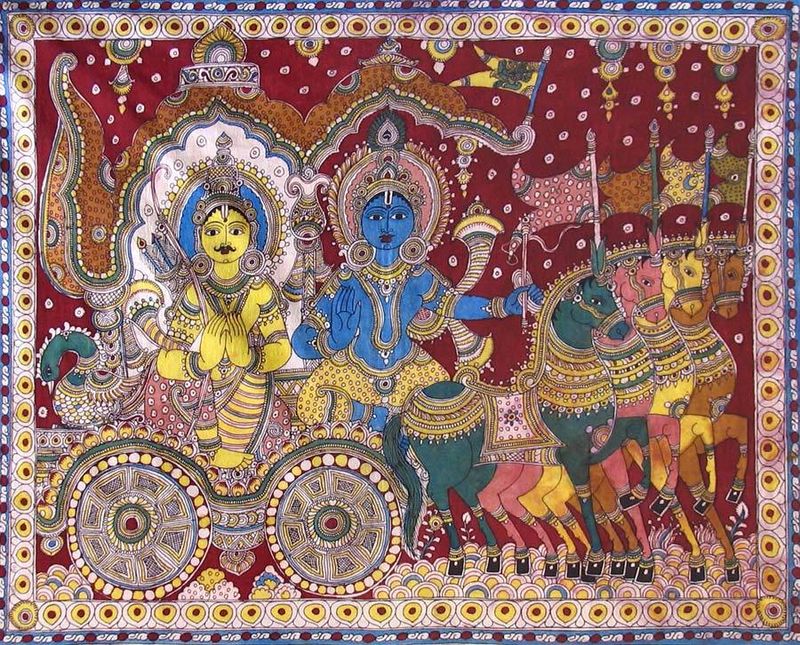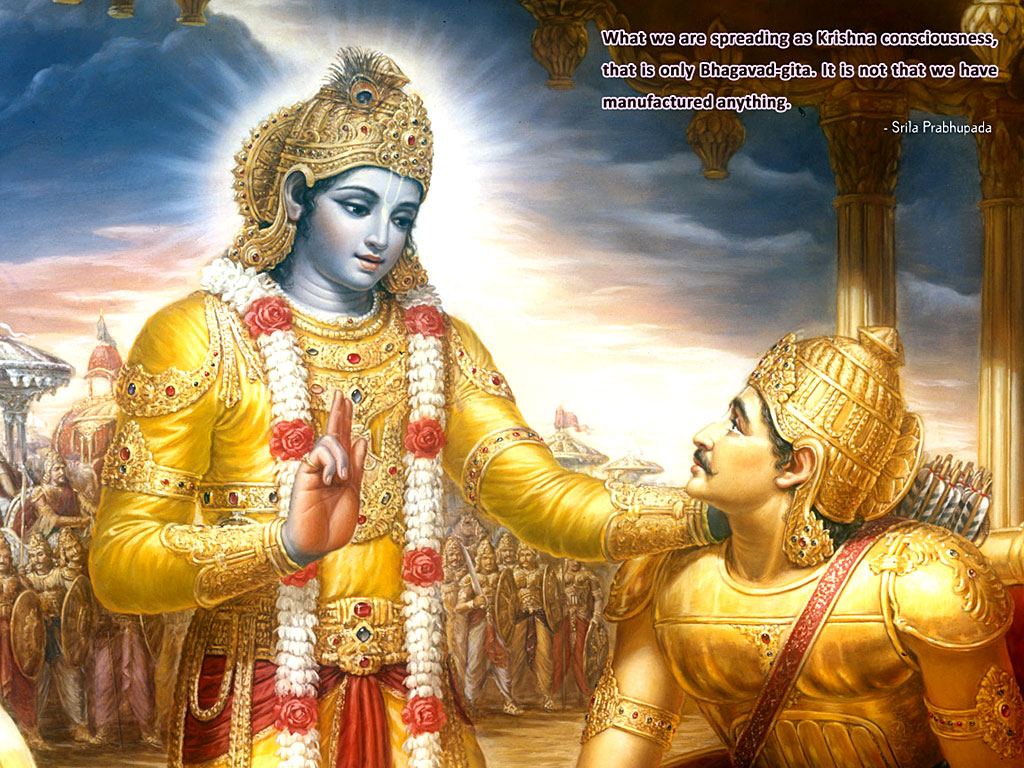
अथ श्री गीतामाहात्म्यम् ॥
The Greatness of The Gita
श्री गणेशाय नमः !! श्री राधारमणाय नमः !!
Salutation to Sri Ganesa ! Salutation to Sri Radharamana !
Ganesa is the god of wisdom and remover of obstacles; hence he is invoked and worshipped at the commencement of every important undertaking. Radharamana, the Lover of Radha, Sri Krishna.
भगवान् श्री गणेश केँ प्रणाम अछि ! श्री राधारमण केँ प्रणाम अछि !!
गणेश बुद्धि के देवता हैं और सभी बाधाओं को दूर करनेवाले हैं; अतः हर कार्य के आरम्भ करते समय उनका आवाहन एवं पूजा किया जाता है । राधारमण, राधा के प्रेमी, श्री कृष्ण ! उन्हें भी प्रणाम करता हूँ ।
गणेश बुद्धिक देवता थिकाह आर सब बाधा सब केँ दूर करयवला छथि; तेँ हरेक कार्यक आरम्भ करैत समय हुनका आवाहन एवं पूजा कयल जाइत छन्हि । राधारमण, राधाक प्रेमी, श्री कृष्ण ! हुनको हम प्रणाम करैत छी ।
धरोवाच ।
भगवन्परमेशान भक्तिरव्यभिचारिणी ॥
प्रारब्धं भुज्यमानस्य कथं भवति हे प्रभो ॥१॥
Dhara (The Earth) said:
O Blessed Lord, O Supreme Ruler, how may one, who is held back by his Prarbdha Karma, obtain unswerving devotion?
Prarabdha Karma: There are three kinds of Karma: (1) Sanchita or accumulated and stored up in past lives; (2) Agami or that which is yet to be done; (3) Prarabdha or that which is already bearing fruit. This last is that part of the accumulated actions (Sanchita) which has brought about the present life and will influence it until its close. The knowledge of Brahman destroys all accumulated Karma and makes the current work abortive. But the Prarabdha Karma must run out its course, though the balanced mind of a liberated man is not affected by it.
धरा (पृथ्वी) ने कहाः
हे धन्य प्रभु, हे सर्वोच्च शासक (सर्वसत्तावान्), अपने प्रारब्ध कर्मों से पीछे पड़े किसी व्यक्ति को आपके प्रति अव्यभिचारिणी (अनन्य) भक्ति किस प्रकार प्राप्त हो सकता है ?
धरा (पृथ्वी) कहलनिः
हे धन्य प्रभु, हे सर्वोच्च शासक (सर्वसत्तावान्), अपन प्रारब्ध कर्म सब सँ पाछाँ पड़ि गेल कोनो लोक केँ अपनेक प्रति अव्यभिचारिणी (अनन्य-अटूट) भक्ति कोन प्रकारें प्राप्त भ’ सकैत छैक ?
श्रीविष्णुरुवाच ।
प्रारब्धं भुज्यमानो हि गीताभ्यासरतः सदा ॥
स मुक्तः स सुखी लोके कर्मणा नोपलिप्यते ॥२॥
The Lord Vishnu said:
If one be devoted to the constant practice of the Gita, even though he be restrained by Prarabdha Karma, yet is he Mukta, happy, in this very world. He is not tainted by (new) Karma.
यदि कोई गीता का निरन्तर अभ्यास करने के लिये समर्पित हो जाए, चाहे कितना भी प्रारब्ध कर्मों से वंचित हो, फिर भी वह इसी संसार में मुक्त और प्रसन्न होता है । वह नये कर्मों के द्वारा बन्धन में नहीं पड़ता ।
यदि कियो गीता केर निरन्तर अभ्यास करबाक लेल (भक्तिपूर्वक) समर्पित भ’ जाय, चाहे कतबो प्रारब्ध कर्म सब सँ कियैक न वंचित हो, तैयो ओ एहि संसार मे मुक्त आ प्रसन्न रहैत अछि । ओ नव कर्म सब द्वारा बन्धन मे नहि पड़ैत अछि ।
महापापातिपापानि गीताध्यानं करोति चेत् ॥
क्वचित्स्पर्शं न कुर्वन्ति नलिनीदलमम्बुवत् ॥३॥
No evil, however great, can affect him who meditates on the Gita. He is like the lotus leaf untouched by the water.
कोई बुराई, चाहे कितना भी बड़ा हो, गीता अभ्यास से उसको प्रभावित नहीं कर सकता है । वह कमल फूल के पत्ते की तरह जल से अस्पर्शित है ।
(उसको किसी भी बुराई से दाग-कलंक नहीं लग सकता यदि वह गीता का नित्य अभ्यास में समर्पित हो ।)
कोनो पाप (खराबी, दुराशक्ति), चाहे कतबो पैघ हो, गीता अभ्यास सँ ओकरा प्रभावित नहि कय सकैत छैक । ओ कमल फूल केर पात जेकाँ जल सँ अस्पर्शित अछि ।
(ओकरा केहनो खराबी सँ दाग-कलंक नहि लागि सकैछ यदि ओ गीताक नित्य अभ्यास मे समर्पित अछि ।)
गीतायाः पुस्तकं यत्र यत्र पाठः प्रवर्तते ॥
तत्र सर्वाणि तीर्थानि प्रयागादीनि तत्र वै ॥४॥
सर्वे देवाश्च ऋषयो योगिनः पन्नगाश्च ये ॥
गोपाला गोपिका वापि नारदोद्धवपार्षदैः ॥५॥
Where there is the book of the Gita, where its study is proceeded with, there are present all the holy places, there verily, are Prayaga and the rest. There also are all the Devas, Risis, Yogis and Pannagas, so also the Gopalas and Gopikas, with Narada, Uddhava, and their whole train of comrades.
जहाँ पर गीता का पुस्तक हो, जहाँ इसका पाठ (अध्ययन) किया जाता हो, वहाँ पर सच में प्रयाग आदि सारे तीर्थ मौजूद रहता है । वहाँ पर सारे देवगण, ऋषिगण, योगीगण और पन्नगगण भी वहाँ पर रहते हैं । उसी प्रकार, गोपाल और गोपियाँ, नारद, उद्धव और उनके समस्त टोलियों के साथ रहते हैं ।
जेतय गीताक पुस्तक हो, जेतय एकर पाठ (स्वाध्याय, अध्ययन, आदि) कयल जाइत हो, ओतय सच मे प्रयाग आदि सबटा तीर्थ मौजूद रहैत अछि । ओहिठाम समस्त देवगण, ऋषिगण, योगीगण आ पन्नगगण सब सेहो रहैत छथि । तहिना, गोपाल आ गोपी सब, नारद, उद्धव आ हुनक समस्त टोलीक संग रहैत छथि ।
सहायो जायते शीघ्रं यत्र गीता प्रवर्तते ॥
यत्र गीताविचारश्च पठनं पाठनं श्रुतम् ॥
तत्राहं निश्चितं पृथ्वि निवसामि सदैव हि ॥६॥
Where the Gita is read, forthwith comes help. Where the Gita is discussed, recited, taught, or heard, there, O Earth, beyond a doubt, do I Myself unfailing reside.
जहाँ पर गीता पढ़ा जाता है, वहाँ शीघ्र ही सहयोग मिलने लगता है । जहाँ गीता पर विचार (विमर्श) किया जाता है, पाठ किया जाता है, पढ़ाया जाता है, या सुना जाता है, वहाँ पर, हे पृथ्वी, बिना किसी सन्देह का, मैं स्वयं निश्चित रूप से निवास करता हूँ । (रहता हूँ ।)
जाहि स्थान पर गीता पढ़ल जाइत अछि, ओतय शीघ्रहि मदति भेटय लगैत अछि । जेतय गीता पर विचार (विमर्श) कयल जाइत अछि, पाठ कयल जाइत अछि, पढ़ायल जाइत अछि, या सुनल जाइत अछि, ओहिठाम, हे पृथ्वी, बिना कोनो सन्देह केँ हम स्वयं अपन रूप सँ निवास करैत छी । (रहैत छी ।)
गीताश्रयेऽहं तिष्ठामि गीता मे चोत्तमं गृहम् ॥
गीताज्ञानमुपाश्रित्य त्रीन्लोकान्पालयाम्यहम् ॥७॥
In the refuge of Gita I abide; the Gita is My chief abode. Standing on the wisdom of the Gita, I maintain the three worlds.
गीता के आश्रय में मैं रहता हूँ; गीता ही मेरा मुख्य निवासस्थान (घर) है । गीता के ज्ञान (बुद्धि) पर आश्रित रहकर ही मैं तीनों लोकों का पालन करता हूँ ।
गीताक आश्रय मे हमहूँ रहैत छी; गीते हमर प्रमुख निवासस्थान (घर) थिक । गीता केर ज्ञान (बुद्धि) पर आश्रित रहिकय हम तीनू लोक केर पालन-पोषण करैत छी ।
गीता मे परमा विद्या ब्रह्मरूपा न संशयः ॥
अर्धमात्राक्षरा नित्या स्वानिर्वाच्यपदात्मिका ॥८॥
चिदानन्देन कृष्णेन प्रोक्ता स्वमुखतोऽर्जुनम् ॥
वेदत्रयी परानन्दा तत्त्वार्थज्ञानसंयुता ॥९॥
The Gita is My Supreme Knowledge; it is undoubtedly inseparable from Brahman – this Knowledge is absolute, Imperishable, eternal, of the essence of My inexpressible State – the Knowledge comprising the whole of the three Vedas, supremely blissful, and consisting of the realisation of the true nature of the Self – declared by the All-knowing and Blessed Krishna, through His own lips, to Arjuna.
Ardhamatra: lit., the half-syllable, and refers to the dot on the ॐ, symbolically, it stands for the Turiya state, hence the Absolute.
गीता मेरा परम विद्या (बुद्धि) है, जो निस्सन्देह ब्रह्मरूप है । यह ज्ञानों में पूर्ण, अक्षर (अविनाशी) एवं नित्य (अर्धमात्राक्षरा नित्या) है तथा मेरे कभी भी प्रकट नहीं होनेवाली अवस्था का सारतत्त्व है । यह चिदानन्द कृष्ण के अपने ही मुखारविन्द से कहा गया तीनों वेदों का सम्पूर्ण ज्ञान, परमानन्द देनेवाला ज्ञान तथा अपनी आत्मा के सत्य स्वभाव (प्रकृति) को समझनेवाला (आत्मसाक्षात्कार करनेवाला) ज्ञान है, हे अर्जुन ।
अर्धमात्राः साहित्यिक अर्थ, आधी मात्राएं, जो ॐ के ऊपर में स्थित ‘विन्दु’ को इंगित करता है, सांकेतिक रूप से, यह तुरीय अवस्था, अर्थात् पूर्णब्रह्म का द्योतक होता है ।
गीता हमर परम विद्या (बुद्धि) थिक, जे निस्सन्देह ब्रह्मरूप अछि । ई ज्ञान सब मे पूर्ण, अक्षर (अविनाशी) एवं नित्य (अर्धमात्राक्षरा नित्या) अछि तथा हमर कखनहुँ प्रकट नहि होयबला भाव (अबस्था) केर सारतत्त्व अछि । ई चिदानन्द कृष्ण केर अपनहि मुख सँ अर्जुन केँ कहल गेल अछि तथा तीनू वेदक सम्पूर्ण ज्ञान, परम आनन्द दयवला ज्ञान आर अपन आत्माक सत्य स्वभाव (प्रकृति) केँ बुझयवला (आत्मसाक्षात्कार करयवला) ज्ञान अछि ।
अर्धमात्राः साहित्यिक अर्थ, आधा मात्रा सब, जे ॐ केर उपर मे स्थित ‘विन्दु’ केँ इंगित करैत अछि, सांकेतिक रूप सँ, ई तुरीय अवस्था, अर्थात् पूर्णब्रह्म केर द्योतक होइत अछि ।
योऽष्टादश जपेन्नित्यं नरो निश्चलमानसः ॥
ज्ञानसिद्धिं स लभते ततो याति परं पदम् ॥१०॥
That man who with steady mind recites the eighteen chapters daily, attain the perfection of knowledge and thus reaches the highest plane.
वह व्यक्ति जो दृढ़ चित्त (मन) के साथ इसके अठारह अध्यायों को नित्य पाठ (जप) करता है, वह ज्ञान की पूर्णता (सिद्धि) को प्राप्त करता है और इस (ज्ञानसिद्धि की लाभ से) वह परमपद (सर्वोच्च स्थान) को प्राप्त करता है ।
ओ व्यक्ति जे दृढ़ मन (स्थिर चित्त) केर संग एकर अठारहो अध्याय सभक नित्य पाठ (जप) करैत अछि, से ज्ञान केर पूर्णता (सिद्धि) केँ प्राप्त करैत अछि तथा एहि (ज्ञानसिद्धि केर लाभ सँ) ओ परमपद (सर्वोच्च स्थान) केँ प्राप्त करैत अछि ।
पाठे समग्रेऽसम्पूर्णे ततोऽर्घं पाठमाचरेत ॥
तदा गोदानजं पुण्यं लभते नात्र संशयः ॥११॥
If the whole cannot be recited, then half of it may be read; and he who does this acquires merit, equal to that of the gift of a cow. There is no doubt about this.
यदि समग्र पाठ नहीं किया जा सके, तो इसका आधा भाग का पाठ किया जा सकता है; और जो इस प्रकार करता है (आधा भाग का पाठ करता है), उसको एक गाय का दान के बराबर पुण्य का लाभ होता है । इसमें कोई सन्देह नहीं है ।
यदि समग्र पाठ नहि कयल जा सकय, तँ एकर आधार भाग केर पाठ कयल जा सकैत अछि; आर जे एहि प्रकार सँ करैत अछि (आधा भाग केर पाठ करैत अछि), ओकरा एकटा गाय केर दान बराबर पुण्य केर लाभ होइत छैक । एहि मे कोनो सन्देह नहि अछि ।
त्रिभागं पठमानस्तु गङ्गास्नानफलं लभेत् ॥
षडंशं जपमानस्तु सोमयागफलं लभेत् ॥१२॥
By the recitation of a third part, he gains the same merit as by bathing the Ganga. By the repetition of a sixth part, he obtains the fruit of the Soma-sacrifice.
इसके तीसरे भाग का जो पाठ करता है, वह वही पुण्य अर्जित करता है जो गंगा स्नान करने का होता है । छठे भाग के जप करने से सोमयज्ञ करने का फल प्राप्त करता है ।
एकर तेसर भाग केर जे पाठ करैत अछि, ओ वैह पुण्य अर्जित करैछ जे गंगा स्नान करबाक होइत छैक । छठम भाग केर जप (पाठ) कयला सँ सोमयज्ञ करबाक फल प्राप्त करैत अछि ।
एकाध्यायं तु यो नित्यं पठते भक्तिसंयुतः ॥
रुद्रलोकमवाप्नोति गणो भूत्वा वसेच्चिरम् ॥१३॥
He who reads, full of devotion, even one chapter daily, attains to the Rudraloka, and lives there for a long time, having become one of those who wait on Siva.
वह, जो पूर्ण भक्ति के साथ, केवल एक अध्याय ही नित्य पढ़ता है, वह रुद्रलोक को प्राप्त करता है, और वहाँ वह शिव का प्रियपात्र (गण) बनकर चिरकाल (काफी समय) तक निवास करता है ।
ओ, जे पूर्ण भक्तिक संग, मात्र एकटा अध्याय टा नित्य पढ़ैत अछि, ओ रुद्रलोक केँ प्राप्त करैत अछि, तथा ओतय ओ शिव केर कृपापात्र (गण) बनिकय चिरकाल (बहुते समय) धरि निवास करैत अछि ।
अध्यायं श्लोकपादं वा नित्यं यः पठते नरः ॥
स याति नरतां यावन्मन्वन्तरं वसुन्धरे ॥१४॥
The man who daily reads a quarter of a chapter, or of a Sloka, O Earth, attains to human birth throughout the duration of a Manu.
Attains to human birth: is born every time in a man-body.
वह व्यक्ति जो नित्य एक अध्याय का चौथाई भाग, या एक ही श्लोक पढ़ता है, हे धरा (पृथ्वी), वह एक मनु का सम्पूर्ण कालखंड (एक मन्वन्तर) में मनुष्य के रूप में जन्म प्राप्त करता है ।
मनुष्य के रूप में जन्मः हर बार वह मनुष्य के शरीर में ही जन्म लेता है ।
ओ व्यक्ति जे नित्य एकटा अध्याय केर चारिम भाग, या एक टा श्लोक मात्र पढ़ैत अछि, हे धरा (पृथ्वी), ओ एकटा मनु केर सम्पूर्ण कालखंड (एक मन्वन्तर) धरि मनुष्यक रूप मे जन्म प्राप्त करैत रहैत अछि ।
मनुष्य केर रूप मे जन्मः हरेक बेर ओ मनुष्यक शरीर मे मात्र जन्म लैत अछि ।
गीतायाः श्लोकदशकं सप्त पञ्च चतुष्टयम् ॥
द्वौ त्रीनेकं तदर्धं वा श्लोकानां यः पठेन्नरः ॥१५॥
चन्द्रलोकमवाप्नोति वर्षाणामयुतंं ध्रुवम् ॥
गीतापाठसमायुक्तो मृतो मानुषतां व्रजेत् ॥१६॥
The man who recites ten, seven, five, four, three, or two Slokas, or even one or half a Sloka of the Gita, certainly lives in Chandraloka for ten thousand years. He who leaves the body while reading the Gita, obtains the world of Man.
वह व्यक्ति जो दस, सात, पाँच, चार, तीन या दो श्लोकों, या फिर यहाँ तक कि गीता का एक श्लोक का आधा भाग ही नित्य पढ़ता है (जपता है), वह निश्चय ही चन्द्रलोक में दस हजार वर्षों तक रहता है । वह जो अपना शरीर गीता पढ़ते हुए छोड़ता है (मृत्यु प्राप्त करता है), वह मानव के संसार को प्राप्त करता है ।
ओ व्यक्ति जे दस, सात, पाँच, चारि, तीन या दुइ श्लोक सभक, या फेर एतय तक कि गीता केर एकटा श्लोकक आधे भाग टा नित्य पढ़ैत अछि (जपैत अछि), ओ निश्चय टा चन्द्रलोक मे दस हजार वर्ष धरि रहैत अछि । ओ जे अपन शरीर गीता पढ़िते छोड़ैत अछि (यानि मृत्यु प्राप्त करैत अछि), से मानव (मनुष्य) केर संसार केँ प्राप्त करैत अछि ।
गीताभ्यासं पुनः कृत्वा लभते मुक्तिमुत्तमाम् ॥
गीतेत्युच्चारसंयुक्तो म्रियमाणो गतिं लभेत् ॥१७॥
Again, practising the Gita, he attains the Supreme Mukti. The dying man uttering the word “Gita” will attain the goal.
फिर, गीता का अभ्यास करते हुए, वह परम मोक्ष (मुक्ति) को प्राप्त करता है । मरते समय कोई व्यक्ति यदि ‘गीता’ शब्द बोलता है तो उसको सद्गति प्राप्त होती है ।
फेर, गीताक अभ्यास करिते, ओ परम मोक्ष (मुक्ति) केँ प्राप्त करैत अछि । मरैत समय कोनो व्यक्ति यदि ‘गीता’ शब्द बजैत अछि त ओकरा सद्गति (उत्तम गति) प्राप्त होइत छैक ।
गीतार्थश्रवणासक्तो महापापयुतोऽपि वा ॥
वैकुण्ठं समवाप्नोति विष्णुना सह मोदते ॥१८॥
One who loves to hear the meaning of the Gita, even though he has committed heinous sins, attains to heaven, and lives in beatitude with Vishnu.
वह जो गीता का अर्थ सुनना पसन्द करता है, भले वो कितना बड़ा पाप ही क्यों न किया हो, स्वर्गलोक को प्राप्त करता है, और विष्णु के साथ वैकुण्ठलोक का सुख प्राप्त करता है ।
ओ जे गीताक अर्थ सुननाय पसिन करैत अछि, भले ओ कतबो पैघ पाप कियैक न कएने हो, स्वर्गलोक केँ प्राप्त करैत अछि, आर हमरा (विष्णु) संग वैकुण्ठलोक केर सुख प्राप्त करैत अछि ।
गीतार्थं ध्यायते नित्यं कृत्वा कर्माणि भूरिशः ॥
जीवन्मुक्तः स विज्ञेयो देहान्ते परमं पदम् ॥१९॥
He who constantly meditates on the meaning of the Gita, even though he performs Karma incessantly, he is to be regarded as a Jivanmukta; and after the destruction of his body he attains to the highest plane of knowledge.
वह जो निरन्तर गीता के अर्थों पर ध्यान करते रहता है, वह निर्बाध गति से कर्मों को करते हुए भी, उसको जीवनमुक्त माना जाता है; और इस शरीर के खत्म होने ज्ञान के सर्वोच्च ऊँचाई को प्राप्त करता है ।
ओ जे निरन्तर गीता केर अर्थ सब पर ध्यान करैत रहैत अछि, ओ निर्बाध गति सँ कर्म सब केँ करिते, ओकरा जीवनमुक्त मानल जाइत छैक’ आर एहि शरीरक खत्म भेलाक बाद ओ सर्वोच्च स्थान (सब सँ उच्चपद) केँ प्राप्त करैत अछि ।
गीतामाश्रित्य बहवो भूभुजो जनकादयः ॥
निर्धूतकल्मषा लोके गीता याताः परं पदम् ॥२०॥
With the help of this Gita, many kings like Janaka became free from their impurities and attained to the highest goal. It is so sung.
इस गीता के सहयोग से ही, जनक आदि बहुत सारे राजाएँ अपनी अशुद्धता से मुक्त होकर सर्वोच्च उद्देश्य (लक्ष्य, यानि मोक्ष) को प्राप्त किये हैं । ऐसा कहा गया है (गाया जाता है) ।
एहि गीता केर सहयोग मात्र सँ, जनक आदि बहुते रास राजा लोकनि अपन अशुद्धता सँ मुक्त भ’ कय सर्वोच्च उद्देश्य (लक्ष्य, यानि मोक्ष) केँ प्राप्त कयने छथि । एना कहल गेल अछि (विज्ञलोक सब एना गायल करैत छथि) ।
गीतायाः पठनं कृत्वा माहात्म्यं नैव यः पठेत् ॥
वृथा पाठो भवेत्तस्य श्रम एव ह्युदाहृतः ॥२१॥
He, who having finished the reading of the Gita, does not read its Mahatmya as declared here, his reading is in vain; it is all labour wasted.
वह, जिसने गीता का पाठ पूरा कर लिया, यदि माहात्म्य जैसा यहाँ कहा गया है उसको नहीं पढ़ता है तो उसका पढ़ा हुआ व्यर्थ हो जाता है; उसका सारा परिश्रम चौपट (बर्बाद) हो जाता है ।
ओ, जे गीताक पाठ पूरा कय लेलक, जँ माहात्म्य जेना एतय (हमरा द्वारा) कहल गेल अछि, तेकरा नहि पढ़ैत अछि तँ ओकर पढ़ल सबटा व्यर्थ भ’ जाइत छैक; ओकर सारा परिश्रम (मेहनत) पानि मे चलि गेल बुझू । (परिश्रम बेकार भ’ जाइछ ।)
एतन्माहात्म्यसंयुक्तं गीताभ्यासं करोति यः ॥
स तत्फलमवाप्नोति दुर्लभां गतिमाप्नुयात् ॥२२॥
He who studies the Gita, accompanied with this discourse on its Mahatmya, obtains the fruit stated herein, and reaches that goal which is difficult to attain.
वह जो गीता का अध्ययन इस माहात्म्य पर दिये गये शिक्षाओं के साथ करता है, उसको यहाँ वर्णित फल प्राप्त होता है, और वह ऐसा पद को प्राप्त करता है जिसे पाना काफी कठिन (मुश्किल) है ।
ओ जे गीताक अध्ययन एहि माहात्म्य पर देल गेल शिक्षा सभक संग करैत अछि, ओकरा एतय वर्णित फल प्राप्त होइत छैक, आर ओ एहेन पद केँ प्राप्त करैत अछि जेकरा पेनाय अत्यन्त कठिन छैक ।
सूत उवाच ।
माहात्म्यमेतद्गीतायाः मया प्रोक्तं सनातनम् ॥
गीतान्ते च पठेद्यस्तु यदुक्तं तत्फलं लभेत् ॥२३॥
Suta said:
He who will read this eternal Greatness of the Gita, declared by me, after having finished the reading of the Gita itself, will obtain the fruit described herein.
These declarations will, no doubt, seem to be mere flights of extravagant fancy, if they are taken in their literal sense. They may be explained either (1) as mere Arthavada or a statement of glorification meant to stimulate a strong desire for the study of the Gita which being performed day to day, may, by the force of the truth and grandeur of one or other of its teachings, strike an inner chord of the heart some time, so much so as to change the whole nature of the man for good; (2) or, the “reading” and “reciting” and so forth, of the whole or a part, may not perhaps be taken in their ordinary sense, as meaning lip-utterance and the like; but in view of the great results indicated, they may be reasonably construed to mean the assimilation of the essence of the Gita teaching in the practical daily life of the individual. What wonder, then, that such a one who is the embodiment of the Gita would be a true Jnani, or a Jivanmukta, or that he would, in proportion of his success of being so, attain the intermediate spheres of evolution and finally obtain Mukti?
सुत ने कहाः
वह जो मेरे द्वारा कहे गये इस सनातन गीता माहात्म्य को, स्वयं गीता का पाठ पूरा करके पढ़ेगा, उसको यहाँ कहे गये फल अवश्य मिलेगा ।
इन्हें या तो (१) सिर्फ अर्थवाद के तौर पर या गीता की पढ़ाई की गहरी इच्छा जगाने के लिए महिमामंडन के तौर पर समझाया जा सकता है, जिसे नित्य करने पर, इसकी किसी एक शिक्षा की सच्चाई और महानता के बल पर, कभी-कभी दिल के अंदर तक पहुँच सकता है, इतना कि इंसान का पूरा स्वभाव अच्छे के लिए बदल सकता है; (२) या, पूरी या किसी हिस्से को “पढ़ना” और “पाठ करना” आदि, शायद उनके सामान्य मतलब में न लिया जाए, जैसे होंठों से बोलना आदि; लेकिन कहे गए बड़े परिणामों को देखते हुए, इनका सही मतलब यह निकाला जा सकता है कि गीता की शिक्षा का सार मनुष्यों के दैनिक जीवन में शामिल हो रहा है । तो फिर, इसमें क्या हैरानी की बात है कि ऐसा इंसान जो गीता का रूप है, एक सच्चा ज्ञानी, या जीवनमुक्त होगा, या वह, ऐसा होने में अपनी सफलता के हिसाब से, जीवन विकास के बीच के क्षेत्रों को पाएगा और आखिर में मुक्ति पाएगा ?
सुत कहलनिः
ओ जे हमरा द्वारा कहल गेल एहि सनातन गीता माहात्म्य केँ, स्वयं गीताक पाठ पूरा कयकेँ पढ़त, ओकरा एतय कहल गेल फल अवश्य भेटतैक ।
एकरा या तँ (१) केवल अर्थवाद केर रूप मे अथवा गीताक पढ़ाइ केर गहींर इच्छा जगेबाक लेल महिमामंडन केर रूप मे बुझल जा सकैत अछि, जे नित्य कयलापर, एकर कोनो एकटा सन्देश (शिक्षा) केर सत्यता आ महानताक आधार पर, यदा-कदा हृदय केर भीतर तक पहुँचि सकैत अछि, एतेक तक कि लोकक पूरा स्वभाव नीक वास्ते बदैल सकैत छैक; (२) या, पूरा या कोनो भाग केँ “पढ़नाय” आ “पाठ कयनाय” आदि, शायद ओकर सामान्य अर्थ मे नहि लेल जाय, जेना मुख सँ वाचन कयनाय आदि; मुदा कहल गेल पैघ फलादेश सब केँ देखैत, एकर सही मतलब ई निकालल जा सकैछ जे गीताक शिक्षा केर सार (निचोड़) मनुष्य लोकनिक दैनिक जीवन मे शामिल भ’ रहल अछि । तखन फेर, एहि मे कोन आश्चर्यक बात अछि जे एहेन लोक जे गीता केर रूप अछि, एकटा सत्य ज्ञानी, या जीवनमुक्त होयत, या ओ, एहेन बनय मे अपन सफलताक हिसाब सँ, जीवनक विकासक्रमक बीच केर क्षेत्र मे पाओत आ अन्त मे मुक्ति पाओत ?
इति श्रीवाराहपुराणे श्रीगीतामाहात्म्यं संपूर्णम् ॥
Thus ends in the Varaha Purana the discourse designated, The Greatness of the Gita.
Harih Harah!!