
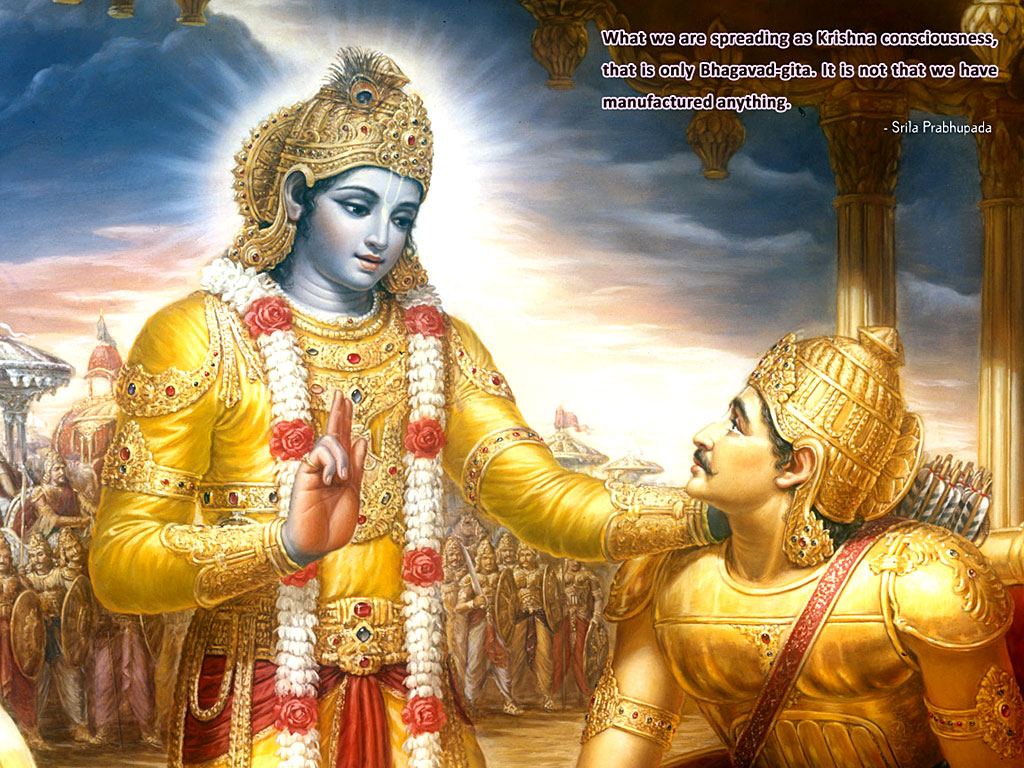
ॐ श्री परमात्मने नमः !!
॥ त्रयोदशोऽध्यायः ॥
अर्जुन उवाच ।
प्रकृतिं पुरुषं चैव क्षेत्रं क्षेत्रज्ञमेव च ॥
एतद्वेदितुमिच्छामि ज्ञानं ज्ञेयं च केशव ॥१३-०॥*
Arjuna said:
Prakrti and Purusa, also the Ksetra and the knower of the Ksetra, knowledge, that which ought to be known – these, O Kesava, I desire to learn.
*This verse is omitted in many editions.
अर्जुन ने कहा:
प्रकृति और पुरुष, क्षेत्र और क्षेत्र का ज्ञाता, ज्ञान, जो जानना चाहिए – ये सब, हे केशव, मैं जानना चाहता हूँ ।
*यह श्लोक कई एडिशन में हटा दिया गया है।
अर्जुन कहलनि:
प्रकृति आर पुरुष, क्षेत्र आर क्षेत्रक ज्ञाता, ज्ञान, जे जनबाक चाही – से सब बात, हे केशव, हम जानय चाहैत छी ।
*ई श्लोक कतेको एडिशन मे हंटा देला गेल छैक ।
श्रीभगवानुवाच ।
इदं शरीरं कौन्तेय क्षेत्रमित्यभिधीयते ॥
एतद्यो वेत्ति तं प्राहुः क्षेत्रज्ञ इति तद्विदः ॥१३-१॥
The Blessed Lord said:
This body, O son of Kunti, is called, Ksetra, and he who knows it is called Ksetrajna by those who know of them (Ksetra and Ksetrajna).
Ksetra: Literally, field: the body is so called because the fruits of action are reaped in it as in a field.
भगवान ने कहा:
हे कुंतीपुत्र, इस शरीर को क्षेत्र कहते हैं, और जो इसे जानता है, उसे (क्षेत्र और क्षेत्रज्ञ को) जाननेवाले लोग क्षेत्रज्ञ कहते हैं ।
क्षेत्र: मतलब, खेत; शरीर को ऐसा इसलिए कहा जाता है क्योंकि कर्मों का फल खेत की तरह इसमें भी मिलता है ।
भगवान कहलनि:
हे कुंतीपुत्र, एहि शरीर केँ क्षेत्र कहैत छैक, आर जे ई जनैत अछि, ओकरा (क्षेत्र आ क्षेत्रज्ञ केँ) जानयवला लोक क्षेत्रज्ञ कहैत छथि ।
क्षेत्र: मतलब, खेत: शरीर केँ एना एहि लेल कहल जाइत छैक कियैक तँ कर्म सभक फल खेतहि जेकाँ अहु मे भेटैत छैक ।
क्षेत्रज्ञं चापि मां विद्धि सर्वक्षेत्रेषु भारत ॥
क्षेत्रक्षेत्रज्ञयोर्ज्ञानं यत्तज्ज्ञानं मतं मम ॥१३-२॥
Me do thou also know, O descendant of Bharata, to be Ksetrajna in all Ksetras. The knowledge of Ksetra and Ksetrajna is considered by Me to be the knowledge.
हे भरतवंशी, तुम मुझको भी सभी क्षेत्रों में क्षेत्रज्ञ ही जानो । क्षेत्र और क्षेत्रज्ञ का ज्ञान ही मेरे द्वारा ज्ञान माना गया है ।
हे भरतवंशी, अहाँ हमरहु सब क्षेत्र मे क्षेत्रज्ञे जानू । क्षेत्र आ क्षेत्रज्ञ केर ज्ञानहि टा हमरा द्वारा ज्ञान मानल गेल अछि ।
तत्क्षेत्रं यच्च यादृक् च यद्विकारि यतश्च यत् ॥
स च यो यत्प्रभाव तत्समासेन मे शृणु ॥१३-३॥
What the Ksetra is, what its properties are, what its modifications are, what effects arise from what causes, and also who He is and what His powers are, that hear from Me in brief.
That: the true nature of Ksetra and Ksetrajna in all these specific aspects.
क्षेत्र क्या है, उसके गुण क्या हैं, उसके रूप का परिवर्तन (बदलाव) क्या हैं, किन कारणों से क्या प्रभाव उत्पन्न होता है, और वह कौन है और उसकी शक्तियाँ क्या हैं, यह सभी मुझसे संक्षेप में सुनो ।
यह: इन सभी खास पहलुओं में क्षेत्र और क्षेत्रज्ञ का असली स्वभाव (प्रकृति) ।
क्षेत्र कि थिक, ओकर गुण कि थिक, ओकर रूप केर परिवर्तन कि थिक, कोन कारण सँ कि प्रभाव उत्पन्न होइत छैक, आर ओ के थिक तथा ओकर शक्ति कि सब छैक, से सबटा हमरा सँ संछेप मे सुनू ।
से: एहि सब खास पक्ष (विन्दु) मे क्षेत्र आर क्षेत्रज्ञ केर असली स्वभाव (प्रकृति) ।
ऋषिभिर्बहुधा गीतं छन्दोभिर्विविधैः पृथक् ॥
ब्रह्मसूत्रपदैश्चैव हेतुमद्भिर्विनिश्चितैः ॥१३-४॥
(This truth) has been sung by Rsis in many ways, in various distinctive chants, in passages indicative of Brahman, full of reasoning, and convincing.
My Note: This chapter explains us a very simple philosophy to realize the truth of who we are and Whom we call Paramaatmaa. Take special care of all the verses.
(इस सत्य को) ऋषियों ने कई तरह से, अलग-अलग मंत्रों में, ब्रह्म से जुड़े हिस्सों में, तर्क से भरे और यकीन दिलाने वाले हिस्सों में गाया है ।
मेरा नोट: यह चैप्टर हमें यह समझने के लिए एक बहुत ही आसान फिलॉसफी समझाता है कि हम कौन हैं और किसे हम परमात्मा कहते हैं। सभी श्लोकों का खास ध्यान रखें ।
(एहि सत्य केँ) ऋषि लोकनि कतेको प्रकार सँ, अलग-अलग मंत्र मे, ब्रह्म सँ जुड़ल भाग मे, तर्क सँ भरल आ विश्वास दियाबय वला भाग मे गेलनि अछि ।
हमर नोट: ई चैप्टर हमरा सब केँ ई बुझय लेल एकटा बहुते आसान फिलॉसफी समझाबैत अछि जे हम सब के छी आ परमात्मा किनका कहैत छी । सबटा श्लोक पर खास ध्यान राखू ।
महाभूतान्यहङ्कारो बुद्धिरव्यक्तमेव च ॥
इन्द्रियाणि दशैकं च पञ्च चेन्द्रियगोचराः ॥१३-५॥
इच्छा द्वेषः सुखं दुःखं सङ्घातश्चेतना धृतिः ॥
एतत्क्षेत्रं समासेन सविकारमुदाहृतम् ॥१३-६॥
The great Elements, Egoism, Intellect, as also the Unmanifested (Mula Prakriti) the ten senses and one (mind), and the five objects of the senses; desire, hatred, pleasure, pain, the aggregate, intelligence, fortitude – the Ksetra has been thus briefly described with its modifications.
The Sankhyas speak of those mentioned in the fifth Sloka as the twenty-four Tattvas or Principles.
The great elements: Mahabhutas – pervade all Vikaras, modifications of matter.
Aggregate: Samghata – combination of the body and the senses.
Desire and other qualities which the Vaisesikas speak of as inherent attributes of the Atman, are spoken of in the sixth Sloka as merely the attributes of Ksetra, and not the attributes of Ksetrajna. Desire and other qualities mentioned here, stand for all the qualities of the Antah-Karna or inner sense – as mere mental states. Each of them, being knowable, is Ksetra.
The Ksetra, of which the various modifications in their totality are spoken of as “this body” in the first Sloka, has been here dwelt upon in all its different forms, from “The great Elements” to “fortitude”.
महान तत्व, अहंकार, बुद्धि, साथ ही अव्यक्त (मूल प्रकृति), दस इंद्रियां और एक (मन), और इंद्रियों के पांच विषय; इच्छा, घृणा, सुख, दुःख, सङ्घाता (समग्रता), बुद्धि, धैर्य – इस तरह क्षेत्र को उसके परिवर्तित रूप सहित संक्षेप में बताया गया है ।
सांख्य (दर्शन) के ज्ञाता लोग पांचवें श्लोक में बताए गए तत्वों को चौबीस तत्व या सिद्धांत कहते हैं ।
महान तत्व: महाभूत – सभी विकारों में व्याप्त, यानी पदार्थ के परिवर्तित रूप में ।
कुल: सङ्घाता – शरीर और इंद्रियों का सम्मिलित रूप । (सब कुछ संयुक्त रूप में – एग्रीगेट) ।
इच्छा और दूसरे गुण जिन्हें वैशेषिक आत्मा के अंदरूनी गुण कहते हैं, उन्हें छठे श्लोक में सिर्फ़ क्षेत्र का गुण बताया गया है, न कि क्षेत्रज्ञ का । यहां बताए गए इच्छा और दूसरे गुण, अंतःकर्ण या अंदरूनी ज्ञानेन्द्रिय के सभी गुणों को दिखाते हैं – सिर्फ़ मानसिक अवस्थाओं के रूप में । उनमें से हर एक जानने लायक होने के कारण क्षेत्र है ।
क्षेत्र, जिसके अलग-अलग रूपों को समग्र रूप से पहले श्लोक में “यह शरीर” कहा गया है, यहाँ उसके सभी अलग-अलग रूपों पर बात की गई है, “महान तत्वों” से लेकर “धैर्य” तक में ।
महान तत्व, अहंकार, बुद्धि, संगहि अव्यक्त (मूल प्रकृति), दस इंद्रिय आर एकटा (मन), आर इंद्रिय केर पांच विषय; इच्छा, घृणा, सुख, दुःख, सङ्घाता (समग्रता), बुद्धि, धैर्य – एहि तरहें क्षेत्र केँ ओकर बदलैत रूप केर संग संक्षेप मे कहल गेल अछि ।
सांख्य (दर्शन) केर ज्ञाता लोकनि पांचम श्लोक मे कहल गेल तत्व सब केँ चौबीस तत्व या सिद्धांत कहैत छथि ।
महान तत्व: महाभूत – समस्त विकार मे व्याप्त, यानी पदार्थ केर परिवर्तित रूप मे ।
कुल योग: सङ्घाता – शरीर आर इंद्रिय सभक सम्मिलन सँ प्राप्त योगफल । (सब किछु संयुक्त रूप मे – एग्रीगेट) ।
इच्छा तथा अन्य गुण जेकरा वैशेषिक (दर्शन) केर ज्ञाता लोकनि आत्माक भितरिया गुण कहैत छथि, तेकरा छठम श्लोक मे केवल क्षेत्र केर गुण कहल गेल अछि, नहि कि क्षेत्रज्ञ केर । एतय कहल गेल इच्छा तथा अन्य गुण, अंतःकर्ण या अंदरूनी ज्ञानेन्द्रिय केर समस्त गुण सब केँ देखबैत अछि – खाली मानसिक अबस्था सभक रूप मे । ताहि मे सँ हरेक चीज जनबा योग्य हेबाक कारण क्षेत्र थिक ।
क्षेत्र, जेकर अलग-अलग रूप सब केँ समग्र रूप सँ पहिलुक श्लोक मे “ई शरीर” कहल गेल छैक, एतय ओकर सबटा अलग-अलग रूप पर बात कयल गेल अछि, “महान तत्व” सँ लय केँ “धैर्य” तक मे ।
अमानित्वमदम्भित्वमहिंसा क्षान्तिरार्जवम् ॥
आचार्योपासनं शौचं स्थैर्यमात्मविनिग्रहः ॥१३-७॥
Humility, unpretentiousness, non-injury, forbearance, uprightness, service to the teacher, purity, steadiness, self-control;
Acharya: One who teaches the means of attaining Moksa.
Purity: external and internal. The former consists in washing away the dirt from the body by means of water, etc., and the latter – the purity of mind – consists in the removal from it of the dirt of attachment and other passions, by the recognition of evil in all objects of the senses.
विनम्रता, सादगी, किसी को चोट न पहुँचाना (अहिंसा), सहनशीलता, ईमानदारी, गुरु की सेवा, पवित्रता, स्थिरता, खुद पर काबू;
आचार्य: वह जो मोक्ष पाने का तरीका सिखाते हैं ।
पवित्रता: बाहरी और अंदरूनी । पहली पवित्रता में पानी वगैरह से शरीर की गंदगी धोना शामिल है, और दूसरी में – मन की पवित्रता – जिसमें इंद्रियों की सभी चीजों में बुराई को पहचानकर, आसक्ति और दूसरी इच्छाओं की गंदगी को हटाना शामिल है ।
विनम्रता, सादापन, केकरो चोट नहि पहुँचेनाय (अहिंसा), सहनशीलता, ईमानदारिता, गुरुक सेवा, पवित्रता, स्थिरता, स्वयं पर नियंत्रण;
गुरु (आचार्य): ओ छथि जे मोक्ष पेबाक तरीका सिखबैत छथि ।
पवित्रता: बाहरी आ अन्दरूनी । पहिल (बाहरी) पवित्रता मे पानि आदि सँ शरीरक गन्दगी केँ धोयब शामिल अछि, आर दोसर मे – मन केर पवित्रता – एहि मे इंद्रिय सभक विषय (सम्बन्धित) चीज सब मे खराबी केँ बुझनाय, आसक्ति व आन-आन इच्छा सभक गन्दगी केँ हंटेनाय शामिल अछि ।
इन्द्रियार्थेषु वैराग्यमनहङ्कार एव च ॥
जन्ममृत्युजराव्याधिदुःखदोषानुदर्शनम् ॥१३-८॥
The renunciation of sense-objects, and also absence of egoism; reflection on the evils of birth, death, old age, sickness, and pain;
Sense-objects: such as sound, touch, etc. of pleasures seen or unseen.
Pain: whether Adhyatmika, i.e., arising in one’s own person; or Adhibhautika, i.e., produced by external agents, or Adhidaivika, i.e., produced by supernatural beings.
Reflection …. pain: or the passage may be interpreted as – reflection on the evils and miseries of birth, death, old age, and sickness. Birth etc., are all miseries, not that they are miseries in themselves, but because they produce misery. From such reflection arises indifference to sense-pleasures, and the senses turn towards the Innermost Self for knowledge.
My Note: Please do understand the importance of these verses very very carefully and maintain our living accordingly.
इंद्रियों की चीजों का त्याग, और अहंकार का न होना; जन्म, मृत्यु, बुढ़ापा, बीमारी और दर्द जैसी बुराइयों (खराबियों) के बारे में सोचना;
इंद्रियों की चीजें: जैसे देखा हुआ या बिना देखा हुआ सुख देनेवाली आवाज, स्पर्श, आदि (इन्द्रियों से जुड़ी चीजें) ।
दर्द: चाहे आध्यात्मिक हो, यानी खुद में पैदा होने वाला हो; या आधिभौतिक हो, यानी बाहरी चीजों से पैदा होने वाला हो, या आधिदैविक, यानी अलौकिक शक्तियों से पैदा होने वाला हो ।
जन्म, मृत्यु… दर्द की बुराइयों पर सोचना: या इस हिस्से का मतलब यह निकाला जा सकता है – जन्म, मृत्यु, बुढ़ापा और बीमारी की बुराइयों और दुःखों पर सोचना । जन्म आदि सभी दुःख हैं, इसलिए नहीं कि वे खुद में दुःख हैं, बल्कि इसलिए कि वे दुःख पैदा करते हैं । ऐसे सोचने से इंद्रियों के सुखों के प्रति बेपरवाही (विरक्ति) पैदा होती है, और तब इंद्रियां ज्ञान के लिए अंतरतम आत्मा की ओर रुख करती हैं (मुड़ जाती हैं) ।
मेरा नोट: कृपया इन श्लोकों के महत्व को बहुत ध्यान से समझें और उसी के अनुसार अपना जीवन जिएं ।
इंद्रिय सभक चीज केर त्याग, आर अहंकार केर नहि होयब; जन्म, मृत्यु, बुढ़ापा, बीमारी आ दर्द केर खराबी सब पर विचार करब (सोचब);
इंद्रिय सभक चीज: जेना देखल या बिनु देखल सुख दयवाली आवाज, स्पर्श आदि ।
दर्द: चाहे आध्यात्मिक हो, यानी स्वयं उत्पन्न होयवला हो; या आधिभौतिक हो, यानि बाहरी चीज सब सँ उत्पन्न होयवला हो, या आधिदैविक हो, यानि अलौकिक शक्ति सब सँ उत्पन्न होयवला हो ।
जन्म, मृत्यु… दर्द केर खराबी सब पर विचार करब (सोचब): या एहि वाक्यांशक अर्थ ई निकालल जा सकैत अछि – जन्म, मृत्यु, बुढ़ापा आर बीमारी केर खराबी व दुःखादि पर विचार कयनाय । जन्म आदि सबटा दुःख छी, एहि लेल नहि जे ओ स्वयं मे दुःख छी, बल्कि एहि लेल जे ओ दुःख उत्पन्न करैत अछि । एना सोचला सँ इंद्रिय सँ जुड़ल सुख सभक प्रति विरक्ति (वैराग्य) उत्पन्न होइत अछि, तथा इंद्रिय सब ज्ञान प्राप्तिक लेल अन्तरतम आत्मा दिश मुड़ि जाइत अछि (रुख करैत अछि) ।
हमर नोट: कृपया एहि श्लोक सभक महत्व केँ बहुत ध्यान सँ बुझू आर ताहि अनुसार अपन जीवन जीबू ।
असक्तिरनभिष्वङ्गः पुत्रदारगृहादिषु ॥
नित्य च समचित्तत्वमिष्टानिष्टोपपत्तिषु ॥१३-९॥
Non-attachment, non-identification of self with son, wife, home and the rest, and constant even-mindedness in the occurrence of the desirable and the undesirable;
Identification of self: as in the case of a person who feels happy or miserable when another to whom he is attached, is happy or miserable, and who feels himself alive or dead when his beloved one is alive or dead.
अनासक्ति, बेटे, पत्नी, घर और बाकी चीजों से खुद को न जोड़ना, और अच्छी और बुरी चीजों के होने पर भी हमेशा एक जैसा सोचना;
स्वयं को पहचानना (आत्मज्ञान): जैसे कोई इंसान जिससे जुड़ा है, उसके खुश या दुःखी होने पर खुद को खुश या दुःखी महसूस करता है, और जो अपने किसी खास के जिंदा या मर जाने पर खुद को जिंदा या मरा हुआ महसूस करता है ।
अनासक्ति, बेटा, पत्नी, घर व बाकी चीज सब सँ स्वयं केँ नहि जोड़नाय (चिन्हनाय), आर नीक व बेजा चीज सभक रहलोपर सदिखन एक जेकाँ सोचनाय;
स्वयं केँ चिन्हनाय (आत्म-पहिचान, आत्मज्ञान): जेना कोनो लोक जेकरा संग जुड़ल अछि, तेकर खुशी या दुःखी भेलोपर स्वयं केँ खुश या दुःखी अनुभव करैत अछि, आर जे अपना कोनो खास लोकक जिन्दा आ मरि गेलापर स्वयं केँ जिन्दा या मृत भेल अनुभव करैत अछि ।
मयि चानन्ययोगेन भक्तिरव्यभिचारिणी ॥
विविक्तदेशसेवित्वमरतिर्जनसंसदि ॥१३-१०॥
Unswerving devotion to Me by the Yoga of non-separation, resort to sequestered places, distaste for the society of men;
Resort ….. places: favourable to equanimity of mind, so that uninterrupted meditation on the Self, and the like, may be possible.
Society of men: of the unenlightened and undisciplined people, not of the pure and holy, because association with the latter leads to Jnana.
अनन्य योग (अपरिग्रह – अलग नहीं होनेवाला भाव) के द्वारा मेरे प्रति अविचल (अव्यभिचारिणी) भक्ति, पृथक स्थानों का आश्रय, मानव समाज के प्रति अरुचि;
पृथक स्थानों का आश्रय: मन की समता के लिए अनुकूल, ताकि स्वयं (आत्मा) पर निर्बाध ध्यान, आदि संभव हो सके ।
मानव का समाज: अज्ञानी और अनुशासनहीन लोगों का, शुद्ध और पवित्र लोगों का नहीं, क्योंकि बादवालों (यानी शुद्ध-पवित्र लोगों के) साथ संगति ज्ञान की ओर ले जाती है ।
अनन्य योग (अपरिग्रह – अलग नहि होयवला भाव) द्वारा हमरा प्रति अविचल (अव्यभिचारिणी) भक्ति, पृथक स्थान सभक आश्रय, मानव समाज केर प्रति अरुचि;
पृथक स्थान सभक आश्रय: मन केर समता (समत्व भाव) वास्ते अनुकूल, जाहि सँ अपना आप (स्वयं केर आत्मा) पर निर्बाध ध्यान, आदि संभव भ’ सकय । (एकान्त आ शान्त – निर्जन क्षेत्र आदि ।)
मानव समाज: अज्ञानी आर अनुशासनहीन लोक केर, शुद्ध आर पवित्र लोक केर नहि, कियैक तँ बादवला (यानि शुद्ध आ पवित्र लोक सभक) संग संगति ज्ञान दिश लय जाइत अछि ।
अध्यात्मज्ञाननित्यत्वं तत्त्वज्ञानार्थदर्शनम् ॥
एतज्ज्ञानमिति प्रोक्तमज्ञानं यदतोऽन्यथा ॥१३-११॥
Constant application to spiritual knowledge, understanding of the end of true knowledge; this is declared to be knowledge, and what is opposed to it is ignorance.
These attributes from “Humility” to “Understanding of the end of true knowledge” – are declared to be knowledge, because they are the means conductive to knowledge.
आध्यात्मिक ज्ञान पर लगातार ध्यान देना, सच्चे ज्ञान के लक्ष्य को समझना; इसे ज्ञान कहा गया है, और जो इसके विपरीत है वह अज्ञान है ।
“विनम्रता” से लेकर “सच्चे ज्ञान के लक्ष्य को समझना” तक के ये गुण – ज्ञान कहे गए हैं, क्योंकि ये ज्ञान तक पहुँचने का जरिया हैं ।
आध्यात्मिक ज्ञान पर लगातार ध्यान देनाय, सत्य ज्ञान केर लक्ष्य केँ बुझनाय; एकरा ज्ञान कहल गेल अछि, आर जे एकर विपरीत अछि ओ अज्ञान थिक ।
“विनम्रता” सँ लय केँ “सत्य ज्ञान केर लक्ष्य केँ बुझनाय” धरिक ई समस्त गुण केँ ज्ञान कहल गेल अछि, कियैक तँ यैह ज्ञान तक पहुँचबाक माध्यम थिक ।
ज्ञेयं यत्तत्प्रवक्ष्यामि यज्ज्ञात्वाऽमृतमश्नुते ॥
अनादिमत्परं ब्रह्म न सत्तन्नासदुच्यते ॥१३-१२॥
I shall describe that which has to be known, knowing which one attains to immortality, the beginningless Supreme Brahman. It is called neither being nor non-being.
मैं उसका वर्णन करूँगा जिसको जानना होता है, जिसको जानने से अमरता, अनादि परम ब्रह्म प्राप्त होते हैं । इसे न तो सत् कहते हैं और ना ही असत् कहते हैं ।
हम ओकर वर्णन करब जेकरा जानबाक रहैत अछि, जेकरा जनला सँ अमरता आ अनादि परम ब्रह्म प्राप्त होइत छथि । जिनकर नहि त सत् आ न असत् कहल जाइत छन्हि ।
सर्वतः पाणिपादं तत्सर्वतोऽक्षिशिरोमुखम् ॥
सर्वतः श्रुतिमल्लोके सर्वमावृत्य तिष्ठति ॥१३-१३॥
With hands and feet everywhere, with eyes, heads, and mouths everywhere, with ears everywhere in the universe – That exists pervading all.
हर जगह हाथ और पैर, हर जगह आंखें, सिर और मुंह, ब्रह्मांड में हर जगह कान – वह सब में व्याप्त हैं ।
हरेक जगह हाथ आ पैर, हरेक जगह आँखि, सिर आ मुंह, ब्रह्मांड मे हर जगह कान – ओ सब मे व्याप्त छथि ।
सर्वेन्द्रियगुणाभासं सर्वेन्द्रियविवर्जितम् ॥
असक्तं सर्वभृच्चैव निर्गुणं गुणभोक्तृ च ॥१३-१४॥
Shining by the functions of all the senses, yet without the senses; Absolute, yet sustaining all; devoid of Gunas, yet their experiencer.
सभी इंद्रियों के कामों से झलकने (चमकने) वाला, फिर भी इंद्रियों के बिना; निरपेक्ष, फिर भी सबको संभालने वाला; गुणों से रहित, फिर भी उनका अनुभव करने वाला ।
समस्त इंद्रिय केर कार्य सँ झलकयवला (अभरयवला, चमकयवला), तथापि इंद्रिय बिना; निरपेक्ष, तथापि सब केँ सम्हारनिहार (पालन-पोषण कयनिहार); गुणरहित, तथापि गुणक अनुभव करयवला (ओ ब्रह्म छथि) ।
बहिरन्तश्च भूतानामचर चरमेव च ॥
सूक्षमत्वात्तदविज्ञेयं दूरस्थं चान्तिके च तत् ॥१३-१५॥
With and within (all) beings; the unmoving and also the moving; because of Its subtlety incomprehensible; It is far and near.
Incomprehensible: to the unillumined, though knowable in Itself.
Far: when unknown.
Near: to the illumined, because It is their own Self.
(सभी) प्राणियों के साथ और उनके अंदर; अचल (गतिहीन) और चल (गतिशील) भी; अपनी सूक्ष्मता के कारण समझ से परे; वह दूर हैं और पास हैं ।
समझ से परे: अज्ञानी के लिए, हालाँकि अपने आप में जानने योग्य ।
दूर: जब अज्ञात ।
पास: ज्ञानी के लिए, क्योंकि यह उनका अपना स्वरूप हैं ।
(समस्त) प्राणीक संग आर ओकर भीतर; अचल (गतिहीन) आ चल (गतिशील) सेहो; अपन सूक्ष्मताक कारण समझ सँ दूर; ओ दूरो छथि आ लगो छथि ।
समझ सँ दूर: अज्ञानी लोक लेल, हालाँकि अपने आप मे जानय योग्य छथि ।
दूर: जखन अज्ञात छथि ।
पास: ज्ञानी लोक लेल, कियैक तँ ई हुनकर अपनहि स्वरूप छथि ।
अविभक्तं च भूतेषु विभक्तमिव च स्थितम् ॥
भूतभर्तृ च तज्ज्ञेयं ग्रसिष्णु प्रभविष्णु च ॥१३-१६॥
Impartible, yet It exists as if divided in beings; It is to be known as sustaining beings; and devouring, as well as generating (them).
Devouring: at the time of Pralaya.
Generating: at the time of Utpatti or origin of the universe.
अविभाज्य, फिर भी यह प्राणियों में बंटे हुए हैं; उन्हें प्राणियों को पालने वाले के रूप में जाना जाता है; और उनको खा जानेवाला (ग्रास बनानेवाला, भक्षण करनेवाला) तथा साथ-साथ पैदा करने वाला भी जाना जाता है ।
खा जानेवाला: प्रलय के समय (सभी प्राणियों को अपना ग्रास बनानेवाला, भक्षण करनेवाला) ।
उत्पन्न: उत्पत्ति या ब्रह्मांड की उत्पत्ति के समय (सभी प्राणियों का उत्पन्न करनेवाला) ।
अविभाज्य, तैयो प्राणी सब मे बंटल छथि; हिनका प्राणी (जीव) सभक पालन-पोषण कयनिहारक रूप मे जानल जाइत छन्हि; आर ओकरा सब केँ भक्षण करयवला (खा जायवला, ग्रास बनबयवला) तथा संगहि-संग उत्पन्न करयवला रूप मे सेहो जानल जाइत छन्हि ।
भक्षण: प्रलय केर समय (सब प्राणी केँ अपन ग्रास बनबयवला, भक्षण करयवला) ।
उत्पन्न: उत्पत्ति या ब्रह्मांड केर उत्पत्तिक समय (सब प्राणी सभक उत्पन्न करयवला) ।
ज्योतिषामपि तज्ज्योतिस्तमसः परमुच्यते ॥
ज्ञानं ज्ञेयं ज्ञानगम्यं हृदि सर्वस्य धिष्ठितम् ॥१३-१७॥
The Light even of lights, It is said to be beyond darkness; Knowledge, and the One Thing to be known, the Goal of knowledge, dwelling in the hearts of all.
The Light even of lights: The illuminator of all illuminating things, such as the sun, etc., and Buddhi, etc. Indeed, these latter shine only when illuminated by the Light of the consciousness of the Self.
ज्योतियों की भी ज्योति; इन्हें अंधेरे से परे कहा जाता है; ज्ञान, और जानने योग्य एकमात्र चीज, सभी ज्ञानों का अन्तिम लक्ष्य, जो सभी के हृदय में रहते हैं ।
ज्योतियों की भी ज्योति: सभी प्रकाश देनेवाली चीजों, जैसे सूरज वगैरह, और बुद्धि वगैरह को रोशन करने वाला (प्रकाशों के भी प्रकाश) । असल में, ये बाद वाले (प्रकाशपुंज) तभी चमकते हैं जब खुद की चेतना (ब्रह्मचेतना) की रोशनी से रोशन होते हैं ।
प्रकाशहु केर प्रकाश, जिनका अन्धकार सँ उपर कहल जाइत छन्हि; ज्ञान, आ जानय योग्य एकमात्र चीज, समस्त ज्ञान केर अन्तिम लक्ष्य, जे सभक हृदय मे रहैत छथि ।
प्रकाशहु केर प्रकाश: सम्पूर्ण प्रकाश दयवाली चीज, जेना सूरज आदि, आर बुद्धि आदि केँ प्रकाशित करयवला (प्रकाशहु केर प्रकाश) । असल मे, ई बादवला (प्रकाशपुंज) सब तखनहि प्रकाशित होइछ जखन स्वयं केर चेतना (ब्रह्मचेतनाक) प्रकाश सँ प्रकाशित होइत अछि ।
इति क्षेत्रं तथा ज्ञानं ज्ञेयं चोक्तं समासतः ॥
मद्भक्त एतद्विज्ञाय मद्भावायोपपद्यते ॥१३-१८॥
Thus Ksetra, knowledge, and that which has to be known, have been briefly stated. Knowing this, My devotee is fitted for My state.
इस प्रकार क्षेत्र, ज्ञान और जो जानने योग्य (ज्ञेय) हैं, यह सभी संक्षेप में बताया गया है । यह समझकर (जानकर), मेरा भक्त मेरी स्थिति के योग्य हो जाते हैं ।
एहि प्रकार सँ क्षेत्र, ज्ञान आर जे जनबा योग्य (ज्ञेय) छथि, से सबटा संक्षेप मे कहल गेल अछि । ई सबटा बुझिकय (जानिकय), हमर भक्त हमर स्थितिक योग्य भ’ जाइत छथि ।
प्रकृतिं पुरुषं चैव विद्ध्यनादी उभावपि ॥
विकारांश्च गुणांश्चैव विद्धि प्रकृतिसम्भवान् ॥१३-१९॥
Know thou that Prakrti and Purusa are both beginningless; and know thou also that all modifications and Gunas are born of Prakrti.
Modifications: Vikaras – From Buddhi down to the physical body.
यह जान लो कि प्रकृति और पुरुष दोनों ही अनादि हैं; और यह भी जान लो कि सभी परिवर्तन और गुण प्रकृति से ही पैदा होते हैं ।
परिवर्तन: विकार – बुद्धि से लेकर नीचे शरीर तक ।
ई जानि लिय’ जे प्रकृति आर पुरुष दुनू अनादि छथि; आर इहो जानि लिय’ जे समस्त परिवर्तन तथा गुण प्रकृति मात्र सँ उत्पन्न होइत अछि ।
परिवर्तन: विकार – बुद्धि सँ लयकेँ नीचाँ शरीर धरिक (विभिन्न रूप परिवर्तन सभक सन्दर्भ) ।
कार्यकरणकर्तृत्वे हेतुः प्रकृतिरुच्यते ॥
पुरुषः सुखदुःखानां भोक्तृत्वे हेतुरुच्यते ॥१३-२०॥
In the production of the body and the senses, Prakrti is said to be the cause; in the experience of pleasure and pain, Purusa is said to be the cause.
Senses: five organs of perception, five of action, mind, intellect and egoism.
Purusa: the Jiva is meant here.
Karya: The effect, the physical body.
Karana: Senses. Some read Kaarana, and explain “Kaarya and Kaarana” as “effect and cause”.
शरीर और इंद्रियों के बनने में प्रकृति को कारण कहा गया है; सुख और दुःख के अनुभव में पुरुष को कारण कहा गया है ।
इंद्रियां: कुछ भी समझने की पांच इंद्रियां, पांच कर्म करने वाली इन्द्रियां, मन, बुद्धि और अहंकार ।
पुरुष: यहां जीव (आत्मा) के अर्थ में है ।
कार्य: प्रभाव, भौतिक शरीर ।
करण: इंद्रियां । कुछ लोग कारण पढ़ते हैं, और “कार्य और करण” को “प्रभाव और कारण” के रूप में समझाते हैं ।
शरीर आर इंद्रिय सभक निर्माण (बनय) मे प्रकृति केँ कारण कहल गेल अछि; सुख आर दुःख केर अनुभव मे पुरुष केँ कारण कहल गेल अछि ।
इंद्रिय: किछो बुझबाक लेल पांच इंद्रिय, पांच कर्म करयवाली इंद्रिय, मन, बुद्धि आ अहंकार ।
पुरुष: एतय जीव (आत्मा) केर अर्थ मे अछि ।
कार्य: प्रभाव, भौतिक शरीर ।
करण: इंद्रिय । किछु लोक लोक कारण पढ़ैत छथि, आर “कार्य व करण” केँ “प्रभाव आर कारण” केर रूप मे बुझबैत छथि ।
पुरुषः प्रकृतिस्थो हि भुङ्क्ते प्रकृतिजान्गुणान् ॥
कारणं गुणसङ्गोऽस्य सदसद्योनिजन्मसु ॥१३-२१॥
Purusha seated in Prakrti, experiences the Gunas born of Prakrti; the reason of his birth in good and evil wombs is his attachment to the Gunas.
Seated in: identifying himself with.
Gunas: manifesting themselves as pleasure, pain, and delusion.
प्रकृति में बैठे हुए पुरुष, प्रकृति से पैदा हुए गुणों को महसूस करते हैं; अच्छे और बुरे गर्भ में उनके जन्म का कारण गुणों से उनका जुड़ाव (सङ्ग) होता है ।
में बैठे हुए: खुद को जिसके साथ पहचानते हैं ।
गुण: सुख, दुःख और भ्रम के रूप में खुद को व्यक्त करता है ।
प्रकृति मे बैसल पुरुष, प्रकृति सँ उत्पन्न भेल गुण सब केँ अनुभव करैत छथि; नीक आ खराब गर्भ मे हुनकर जन्म केर कारण गुण सब सँ हुनक जुड़ाव छन्हि ।
मे बैसल: स्वयं केँ जेकरा संग चिन्हैत छथि ।
गुण: स्वयं केँ सुख, दुःख आ भ्रम केर रूप मे व्यक्त करैत अछि ।
उपद्रष्टानुमन्ता च भर्ता भोक्ता महेश्वरः ॥
परमात्मेति चाप्युक्तो देहेऽस्मिन्पुरुषः परः ॥१३-२२॥
And the Supreme Purusa in this body is also called Looker-on, the Permitter, the Supporter, the Experiencer, the Great Lord, and the Highest Self.
Looker-on, the Permitter: He himself does not participate in the activities of the bodily organs, the mind and the Buddhi, being quite apart from them, yet appears to be so engaged. And being a looker-on, He never stands in the way of the activities of Prakrti as manifested in the body. Indeed, all the consciousness or intelligence that manifests itself in the activities of life is but the reflection of the All-pervading, Absolute, and Perfect Intelligence – The Supreme Spirit.
और इस शरीर में जो परम पुरुष हैं, उन्हें देखनेवाला, इजाजत देनेवाला, सहारा देनेवाला, अनुभव करनेवाला, महान भगवान और सबसे ऊँचा ‘स्व’ (परमात्मा) भी कहा जाता है ।
देखने वाला, इजाजत देने वाला: वह खुद शरीर के अंगों, मन और बुद्धि के कामों में हिस्सा नहीं लेते, उनसे बिल्कुल अलग होने के बावजूद, उनमें लगे हुए लगते हैं । और देखनेवाला होने के नाते, वे शरीर में दिखने वाली प्रकृति के कामों के रास्ते में कभी नहीं आते । असल में, जीवन के कामों में दिखने वाली सारी चेतना या बुद्धि, बस उस सर्वव्यापी, निरपेक्ष और संपूर्ण बुद्धि – परमआत्मा का ही प्रतिबिंब है ।
आर एहि शरीर मे जे परम पुरुष छथि, हुनका देखयवला, स्वीकृति दयवला, सहारा दयवला, अनुभव करयवला, महान भगवान आर सबसँ ऊँच ‘स्व’ (परमात्मा) सेहो कहल जाइत छन्हि ।
देखयवला, स्वीकृति दयवला: ओ स्वयं शरीर केर अंग सब मे, मन आ बुद्धि केर काज सब मे भाग नहि लैत छथि, ओहि सँ बिल्कुल अलग हेबाक बादो, ओहि सब मे लागल बुझाइत छथि । आर देखयवला हेबाक नाते, ओ शरीर मे देखायवला प्रकृति केर काज सभक रास्ता मे कखनहुँ नहि अबैत छथि । वास्तव मे, जीवनक काज सब मे देखायवला सम्पूर्ण चेतना या बुद्धि, बस ओहि सर्वव्यापी, निरपेक्ष आ सम्पूर्ण बुद्धि – परमात्मे केर प्रतिविम्ब (झलक) थिक ।
य एवं वेत्ति पुरुषं प्रकृतिं च गुणैः सह ॥
सर्वथा वर्तमानोऽपि न स भूयोऽभिजायते ॥१३-२३॥
He who thus knows the Purusa and Prakrti together with the Gunas, whatever his life, is not born again.
Whatever his life, etc.: Whether he be engaged in prescribed or forbidden acts, he is not born again. For, the acts, the seeds of rebirth, of a knower of Truth are burnt by the fire of knowledge, and thus cannot be effective causes to bring about births. In his case they are mere semblances of Karma; a burnt cloth, for instance, cannot serve the purpose of a cloth.
जो इस तरह पुरुष और प्रकृति को गुणों के साथ जानता है, चाहे उसका जीवन कैसा भी हो, वह दोबारा जन्म नहीं लेता ।
चाहे उसका जीवन कैसा भी हो, वगैरह: चाहे वह तय अथवा मना किए गए कामों में लगा हो, वह दोबारा जन्म नहीं लेता । क्योंकि, सत्य को जानने वाले के कर्म, यानी दोबारा जन्म के बीज, ज्ञान की आग से जल जाते हैं, और इसलिए वे जन्म देने के असरदार कारण नहीं बन सकते । उसके मामले में वे सिर्फ कर्म की झलक हैं; उदाहरण के लिए, एक जला हुआ कपड़ा, कपड़े का काम नहीं कर सकता ।
जे एहि तरहें पुरुष आर प्रकृति केर गुण सभक संग जनैत अछि, चाहे ओकर जीवन केहनो हो, ओ दोबारा जन्म नहि लैत अछि ।
चाहे ओकर जीवन केहनो हो, आदि: चाहे ओ तय अथवा मना कयल गेल कर्म सब मे लागल हो, ओ दोबारा जन्म नहि लैछ । कियैक तँ, सत्य केँ जानयवलाक कर्म, यानि दोबारा जन्म लयवला बीज, ज्ञान केर अग्नि सँ जरि जाइत छैक, आर तेँ ओ जन्म दयवला प्रभावी कारण नहि बनि सकैछ । ओकर मामिला मे ओ सिर्फ कर्मक झलक छी; उदाहरण लेल, एकटा जरि गेल कपड़ा, कपड़ाक काज नहि कय सकैत अछि ।
ध्यानेनात्मनि पश्यन्ति केचिदात्मानमात्मना ॥
अन्ये सांख्ये योगेन कर्मयोगेन चापरे ॥१३-२४॥
Some by meditation behold the Self in their own intelligence by the purified heart, others by the path of knowledge, others again by Karma-Yoga.
कुछ लोग ध्यान से, शुद्ध हृदय से अपनी बुद्धि में आत्मा को देखते हैं, कुछ ज्ञान के मार्ग से, और कुछ फिर कर्म-योग से ।
किछु लोक ध्यान सँ, शुद्ध हृदय सँ अपन बुद्धि मे आत्मा केँ देखैत अछि, किछु ज्ञान केर मार्ग सँ, आर किछु लोक फेर कर्म-योग सँ (देखैत अछि) ।
अन्ये त्वेवमजानन्तः श्रुत्वान्येभ्य उपासते ॥
तेऽपि चातितरन्त्येव मृत्युं श्रुतिपरायणाः ॥१३-२५॥
Others again not knowing thus, worship as they have heard from others. Even these go beyond death, regarding what they have heard as the Supreme Refuge.
Not knowing thus: not able to know the Self described above, by one of the several methods as pointed out.
From others: Acharyas or spiritual teachers.
Regarding: following with Sraddha.
What they have heard: i.e., they solely depend upon the authority of others instructions.
अन्य लोग ऐसा न जानते हुए भी, दूसरों से सुनी हुई बातों के अनुसार पूजा करते हैं । ये लोग भी जो कुछ सुना है, उसे ही सर्वोच्च आश्रय मानकर मृत्यु के पार चले जाते हैं ।
ऐसा न जानकर: ऊपर बताए गए कई तरीकों में से किसी एक से भी आत्मा (स्वयं) को नहीं जान पाना ।
दूसरों से: आचार्यों या आध्यात्मिक गुरुओं से सुनकर ।
मानकरः श्रद्धा के साथ अनुसरण करके ।
जो कुछ उन्होंने सुना है: यानी, वे पूरी तरह दूसरों के निर्देशों पर निर्भर रहते हैं ।
आन लोक सब एना नहियो जानैत, कियो आर लोक (दोसर लोक) सँ सुनल गेल बात मुताबिक पूजा (योग-साधना) करैत छथि । ई सब जेहो किछु सुनने रहैत छथि, तेकरे सर्वोच्च आश्रय (शरण) मानिकय मृत्युक (भवसागर) केर पार उतरि जाइत छथि ।
एना नहियो जानैत: उपर कहल गेल कतेको तरीका सब मे कोनो एकहु टा सँ स्वयं (अपन आत्मा) केँ नहि जानि पेनाय ।
कियो आर (दोसर लोक) सँ: आचार्य या आध्यात्मिक गुरु लोकनि सँ सुनिकय ।
मानिकयः श्रद्धाक संग अनुसरण कयकेँ ।
जेहो किछु ओ सुनने छथि: यानि, ओ पूर्णरूप सँ दोसरक निर्देश सब पर निर्भर रहैत छथि ।
यावत्सञ्जायते किञ्चित्सत्त्वं स्थावरजङ्गमम् ॥
क्षेत्रक्षेत्रज्ञसंयोगात्तद्विद्धि भरतर्षभ ॥१३-२६॥
Whatever being is born, the moving or the unmoving, O bull of the Bharatas, know it to be from the union of Ksetra and Ksetrajna.
Union of …. Ksetrajna: The union of Ksetra and Ksetrajna, of the object and the subject, is of the nature of mutual Adhyasa which consists in confounding them as well as their attributes with each other, owing to the absence of discrimination of their real nature. This false knowledge vanishes when one is able to separate Ksetra from Ksetrajna.
हे भरतर्षभ, जो भी जीव पैदा हुआ है, चाहे वह चल हो या अचल हो, उसे क्षेत्र और क्षेत्रज्ञ के मिलन से ही (पैदा हुआ) जान लो ।
क्षेत्र-क्षेत्रज्ञ का मिलन: क्षेत्र और क्षेत्रज्ञ, वस्तु और विषय का मिलन, आपसी अध्यास जैसा होता है, जिसमें उनके असली रूप में अंतर न होने के कारण वे और उनके गुण एक-दूसरे के साथ मिश्रित हो जाते हैं । यह गलत ज्ञान तब खत्म हो जाता है जब कोई क्षेत्र को क्षेत्रज्ञ से अलग कर पाता है ।
हे भरतर्षभ, जेहो जीव उत्पन्न भेल अछि, चाहे ओ चल हो या अचल हो, ओकरा क्षेत्र आर क्षेत्रज्ञ केर मिलन मात्र सँ (उत्पन्न भेल) जानि लियह ।
क्षेत्र-क्षेत्रज्ञक मिलन: क्षेत्र आर क्षेत्रज्ञ, वस्तु आ विषय केर मिलन, आपसी अध्यास (भ्रम) जेकाँ होइत छैक, जाहि मे ओकर असली रूप मे अन्तर नहि हेबाक कारण ओ आर ओकर गुण एक-दोसराक संग मिश्रित (मिझरा) जाइत छैक । ई गलत ज्ञान (मिथ्या ज्ञान, अध्यास) तखन खत्म भ’ जाइत छैक जखन कियो क्षेत्र केँ क्षेत्रज्ञ सँ अलग कय पबैत अछि ।
समं सर्वेषु भूतेषु तिष्ठन्तं परमेश्वरम् ॥
विनश्यत्स्वविनश्यन्तं यः पश्यति स पश्यति ॥१३-२७॥
He sees who sees the Supreme Lord, existing equally in all beings, deathless in the dying.
वही देखता है जो परमप्रभु को देखता है, जो सभी प्राणियों में समान रूप से विद्यमान हैं, मरने वाले में अमर हैं ।
वैह देखैत अछि जे परमप्रभु केँ देखैत अछि, जे समस्त प्राणी सब मे समान रूप सँ विद्यमान छथि, मरइयोवला मे अमर छथि ।
समं पश्यन् हि सर्वत्र समवस्थितमीश्वरम् ॥
न हिनस्त्यात्मनात्मानं ततो याति परां गतिम् ॥१३-२८॥
Since seeing the Lord equally existent everywhere, he injures not Self by self, and so goes to the highest Goal.
He injures…. by self: like the ignorant man either by ignoring the Self in others (Avidya or nescience), or regarding the non-Self (physical body, etc.) as the Self (Mithya-Jnana or false knowledge) – the two veils that hide the true nature of the Self.
क्योंकि वह भगवान को हर जगह समान रूप से देखता है, इसलिए वह स्वयं (आत्मा) से स्वयं (परमात्मा) को नुकसान नहीं पहुँचाता, और इस तरह सबसे ऊँचे लक्ष्य तक पहुँच जाता है ।
वह स्वयं से…. को नुकसान नहीं पहुँचाता है: जैसे अनजान आदमी या तो दूसरों में स्वयं (आत्मा) को नजरअंदाज करके (अविद्या या अज्ञानता), या गैर-आत्मा (भौतिक शरीर, वगैरह) को आत्मा मानकर (मिथ्या-ज्ञान या झूठा ज्ञान) – यय दो परदे आत्मा (स्वयं) के सत्य रूप को छिपा देते हैं ।
कियैक तँ ओ भगवान केँ हरेक जगह समान रूप सँ देखैत अछि, ताहि सँ ओ स्वयं (आत्मा) सँ स्वयं (परमात्मा) केँ नोकसानी नहि पहुँचाबैछ, आर एहि तरहें सबसँ ऊँच लक्ष्य (परमब्रह्म – परमपिता परमेश्वर) धरि पहुँचि जाइत अछि ।
ओ स्वयं सँ…. केँ नोकसानी नहि पहुँचाबैत अछि: जेना अन्जान आदमी या तँ दोसर लोक मे स्वयं (आत्मा) केँ नजरअंदाज कयकेँ (अविद्या या अज्ञानता), या गैर-आत्मा (भौतिक शरीर, आदि) केँ आत्मा मानिकय (मिथ्या-ज्ञान या झूठक ज्ञान) – एहि दुइ गोट पर्दा सँ आत्मा (स्वयं) केर सत्य रूप केँ नुका दैत अछि ।
प्रकृत्यैव च कर्माणि क्रियमाणानि सर्वशः ॥
यः पश्यति तथात्मानमकर्तारं स पश्यति ॥१३-२९॥
He sees, who sees all actions are done by Prakrti alone and that the Self is actionless.
वही देखता है, जो यह देखता है कि सभी काम केवल प्रकृति ही करती है और परमात्मा बिना काम के रहते हैं ।
वैह देखैत अछि, जे ई देखैछ जे सबटा काज मात्र प्रकृति टा करैत अछि आर परमात्मा बिना काज केँ रहैत छथि ।
यदा भूतपृथग्भावमेकस्थमनुपश्यति ॥
शरीरस्थोऽपि कौन्तेय न करोति न लिप्यते ॥१३-३०॥
When he sees the separate existence of all beings inherent in the One, and their expansion from That (One) alone, he then becomes Brahman.
जब वह उन एक (परमात्मा) में निहित सभी प्राणियों के अलग-अलग अस्तित्व को देखता है, और अकेले उन्हीं (एक) से सबका विस्तार देखता है, फिर वह ब्रह्म बन जाता है ।
जखन ओ एक (परमात्मा) मे निहित समस्त प्राणीक अलग-अलग अस्तित्व केँ देखैत अछि, आर असगर वैह (एक) सँ समस्त प्राणीक विस्तार भेल देखैत अछि, फेर ओ ब्रह्म बनि जाइत अछि ।
अनादित्वान्निर्गुणत्वात्परमात्मायमव्ययः ॥
शरीरस्थोऽपि कौन्तेय न करोति न लिप्यते ॥१३-३१॥
Being without beginning and devoid of Gunas, this Supreme Self, immutable, O son of Kunti, though existing in the body neither acts nor is affected.
Being beginning: having no cause.
Neither …. affected: Because the Self is not the doer, therefore He is not touched by the fruit of action.
हे कुंती के पुत्र, यह परमात्मा, जो बिना आदि (आरम्भ) और गुणों के हैं, शरीर में होने के बावजूद न तो काम करते हैं और न ही उन पर असर होता है ।
आदि (आरम्भ) होना: जिनका कोई कारण नहीं है ।
न तो काम करते हैं और न ही उन पर असर होता है: क्योंकि आत्मा कर्ता नहीं है, इसलिए उसे कर्म के फल से कोई फर्क नहीं पड़ता ।
हे कुंतीक पुत्र, ई परमात्मा, जे बिना आरम्भ आर गुण सभक छथि, शरीर मे भेलाक बादो नहि तँ काज करैत छथि आ नहिये हुनका उपर असर (प्रभाव) पड़ैत छन्हि ।
आरम्भ होयब: जिनकर कोनो कारण नहि अछि ।
नहि तँ काज करैत छथि, नहिये हुनका पर असर (प्रभाव) पड़ैत छन्हि: चूँकि आत्मा कर्ता नहि छथि, ताहि द्वारे हुनका कर्मक फल सँ कोनो फर्क नहि पड़ैत छन्हि ।
यथा सर्वगतं सौक्ष्म्यादाकाशं नोपलिप्यते ॥
सर्वत्रावस्थितो देहे तथात्मा नोपलिप्यते ॥१३-३२॥
As the all-pervading Akasa, because of its subtlety, is not tainted, so the Self existent everywhere in the body, is not tainted.
जैसे हर जगह मौजूद आकाश अपनी सूक्ष्मता के कारण दूषित नहीं होता, वैसे ही शरीर में हर जगह मौजूद आत्मा भी दूषित नहीं होती ।
जेना हरेक जगह मौजूद आकाश अपन सूक्ष्मताक कारण दूषित नहि होइछ, तेनाही शरीर मे हर जगह मौजूद आत्मा सेहो दूषित नहि होइछ ।
यथा प्रकाशयत्येकः कृत्स्नं लोकमिमं रविः ॥
क्षेत्रं क्षेत्री तथा कृत्स्नं प्रकाशयति भारत ॥१३-३३॥
As the one sun illumines all this world, so does He who abides in the Ksetra, O descendant of Bharata, illumine the whole Ksetra.
जैसे एक ही सूर्य इस सारे जगत को प्रकाशित करता है, वैसे ही वह जो इस क्षेत्र में रहता है, हे भरत के वंशज, पूरे क्षेत्र को प्रकाशित करता है ।
जेना एक्के टा सूर्य एहि सम्पूर्ण जगत केँ प्रकाशित करैत अछि, तहिना ओ जे एहि क्षेत्र मे रहैत छथि, हे भरत केर वंशज, पूरे क्षेत्र केँ प्रकाशित करैत छथि ।
क्षेत्रक्षेत्रज्ञयोरेवमन्तरं ज्ञानचक्षुषा ॥
भूतप्रकृतिमोक्षं च ये विदुर्यन्ति ते परम् ॥१३-३४॥
They who thus with the eye of knowledge perceive the distinction between the Ksetra and the Ksetrajna, and also the emancipation from the Prakrti of beings, they go to the Supreme.
Prakrti of being: the material nature or delusion of beings due to Avidya.
जो लोग इस तरह ज्ञान की आँखों से क्षेत्र और क्षेत्रज्ञ के बीच का अंतर समझ लेते हैं, और जीवों की प्रकृति से मुक्ति भी पा लेते हैं, वे परमात्मा के पास जाते हैं ।
जीव की प्रकृति: अविद्या के कारण जीवों का भ्रम (मोह) या भौतिक स्वभाव ।
जे लोक एहि तरहें ज्ञानक आँखि सँ क्षेत्र आ क्षेत्रज्ञक बीच केर अन्तर बुझि लैत अछि, आर जीव सभक प्रकृति सँ मुक्ति सेहो पाबि लैत अछि, ओ परमात्मा लग जाइत अछि ।
जीवक प्रकृति: अविद्याक कारण जीव केर भ्रम (मोह) या भौतिक स्वभाव ।
॥ इति क्षेत्रक्षेत्रज्ञविभागयोगो नाम त्रयोदशोऽध्यायः ॥
The end of thirteenth chapter designated, The Discrimination of the Ksetra and the Ksetrajna.
हरिः हरः!!


1 Comment
Bahut Sunder prasang aajuk ehi bhag m. Bina gyan k kichhu penai sambhav nai.
अर्जुन उवाच ।
प्रकृतिं पुरुषं चैव क्षेत्रं क्षेत्रज्ञमेव च ॥
एतद्वेदितुमिच्छामि ज्ञानं ज्ञेयं च केशव ॥१३-०॥*
अर्जुन कहलनि:
प्रकृति आर पुरुष, क्षेत्र आर क्षेत्रक ज्ञाता, ज्ञान, जे जनबाक चाही – से सब बात, हे केशव, हम जानय चाहैत छी ।
*ई श्लोक कतेको एडिशन मे हंटा देला गेल छैक ।